



 India
India NRI
NRIAdvantage AxisDirect
- 20 investment products
- 3 great platforms to invest
- 5 fun-tastic learn courses
- 5 powerful research segments
- 4 prestigious awards
- 9 lakh+ happy investors

Quotes
Back To Menu
-
Offerings
- Overview
- Products
- DIGITAX
- Managed Accounts
- Private Client Group
- Business Associates
- NRI
- Refer & Earn
- Insurance
- SGB
- Investment Solutions
- Investment Advisory
- Markets
- Research
- Learn
- PORTFOLIO
- PROFILE
Investing in Sovereign Gold Bonds
Feb 18, 2026

Thinking of Buying Sovereign Gold Bonds? Here’s What You Should Know
Are you thinking about buying sovereign gold bonds? What You Should Know Gold has always been important to Indian families, not just as jewellery but also as a way to save money for the long term. But over time, investors have started looking for better and safer ways to invest in gold that don't involve having to store the metal. This is where sovereign gold bonds (SGBs) come in.
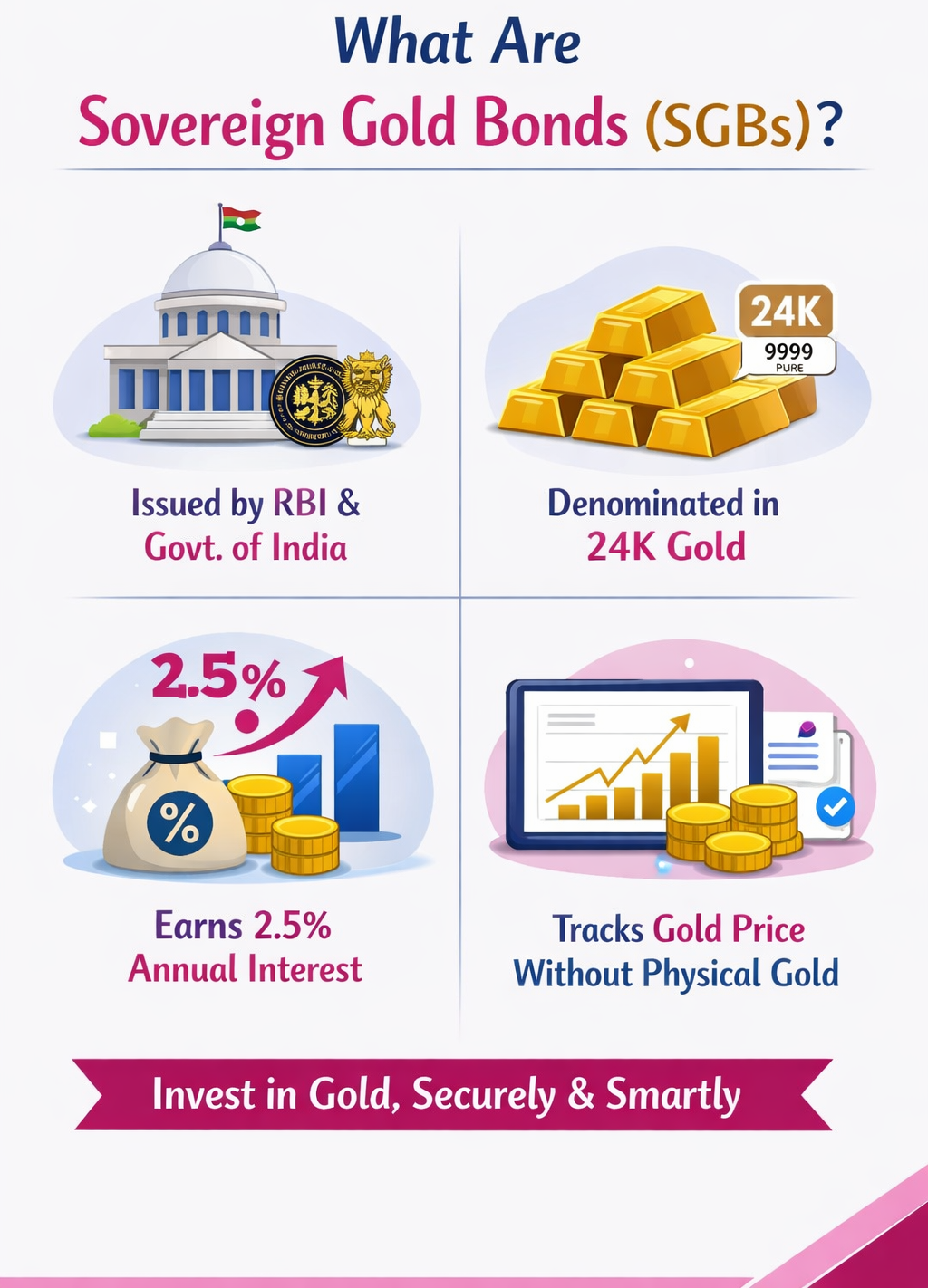
The Reserve Bank of India issues sovereign gold bonds on behalf of the Government of India. These bonds let investors get a taste of gold prices in either paper or demat form. For a lot of investors, sovereign gold bonds are the best of both worlds: they offer the traditional appeal of gold and the safety and ease of a financial instrument.
What Are Gold Bonds from the Government?
Sovereign gold bonds are government bonds that are worth a certain amount of gold. Investors don't own real gold; instead, they own these bonds in the form of certificates or in their demat accounts. The bond's value changes with the market price of gold.
Sovereign gold bonds pay a fixed interest rate (currently 2.5% per year on the initial investment) in addition to the price going up. When they reach maturity, investors get cash worth the current market value of gold. This sets them apart from jewellery or gold coins.
Why do people think about investing in sovereign gold bonds?
People often think of gold as a way to protect themselves from inflation and the value of their money going down. When the economy is unstable or inflation is high, gold prices tend to go up because investors want to put their money in safer assets. Sovereign gold bonds were created to give people a clear and organized way to invest in gold while also making the country less reliant on gold imports.
Sovereign gold bonds offer the following to individual investors:
- • Getting gold without having to worry about storage or purity
- • Interest income on a regular basis, as well as capital growth
- • Government support, which makes people feel safer and more trusted.
Some of the main benefits of sovereign gold bonds are:
- • No risk of theft or purity problems: Because bonds are kept in electronic or paper form, there is no risk of these problems.
- • Interest income: Investors get a set amount of interest each year on their investment, while physical gold does not.
- • Tax efficiency: Individual investors don't have to pay taxes on capital gains when they redeem their investments at maturity.
- • Backed by the government: The Government of India backs sovereign gold bonds, which makes them fairly safe.
- • Diversification of your portfolio: Gold helps balance out a portfolio that is mostly made up of stocks or bonds.
Sovereign gold bonds offer a strong choice for those looking to invest in gold over the long haul, and for good reason.
Risks of Sovereign Gold Bonds:
Though sovereign gold bonds come with some benefits, prospective investors need to weigh the risks, too.
- • The value of these bonds hinges on the ever-changing price of gold, a commodity known for its price swings.
- • Concerns about liquidity: The secondary market doesn't always have a lot of trading volume, which can make it hard to get out early.
- • Long maturity period: Bonds have a maturity of 8 years, and you can only cash them in early after the 5th year.
- • Market prices can fluctuate significantly. Should a bond be sold prior to its maturity date, its value might not match that of gold.
- • Tax on interest: The amount of tax on interest earned depends on the investor's income level.
Because of these risks, sovereign gold bonds are better for holding onto for a long time than for trading quickly.
Who can get a Sovereign Gold Bond
The requirements for getting a sovereign gold bond are simple:
- • People who live in the area, Hindu Undivided Families (HUFs), trusts, and institutions can
all invest.
- • Investors must meet KYC requirements
- • You can buy bonds at banks, post offices, stock exchanges, or online.
- • The smallest amount you can invest is 1 gram of gold.
- • The maximum limit for individuals is 4 kg per year (with lower limits for other groups).
This means that most retail investors can buy sovereign gold bonds.
Who Should Think About Buying Sovereign Gold Bonds?
People who want to invest in sovereign gold bonds may want to:
- • Investors who want to invest in gold without actually owning gold.
- • People who want to invest in gold in a way that saves them money on taxes.
- • Long-term investors who want to spread out their investments.
- • People looking for an investment option backed by the government.
Sovereign gold bonds are best used as part of a larger asset allocation strategy, not as the main source of returns.
https://www.axisdirect.in/knowledge-center/commodities
SGB vs. Gold ETF vs. Real Gold
SGB vs Gold ETF vs Physical Gold
Feature Sovereign Gold Bonds (SGBs) Gold ETFs Physical Gold Issuer Government of India Fund houses Jewellers/Banks Return Gold price + fixed interest Gold price only Gold price only Liquidity Low before maturity High (exchange-traded) Moderate Storage Not required Not required Required (risk of theft/purity) Taxation Capital gains tax-free at maturity Taxable Taxable Best For Long-term investors Short- to medium-term investors Traditional buyers
https://www.axisdirect.in/etfs
Conclusion:
Sovereign gold bonds are a structured way to invest in gold that also pays interest and is tax-efficient. Sovereign gold bonds have risks, like price fluctuations and low liquidity, but their benefits make them a good choice for long-term investors who want to diversify. Investors can decide if investing in sovereign gold bonds is right for them by learning about the benefits, risks, and eligibility requirements.
FAQ
1. How does a Sovereign Gold Bond work?
The Reserve Bank of India issues Sovereign Gold Bonds SGBs which investors can purchase in units of 24-carat 999 purity gold that are represented in grams. Investors can gain profit from gold price movements without needing to purchase or store or protect actual gold. The bond value increases or decreases according to gold price fluctuations while investors receive fixed interest payments based on their initial investment.
2. Is Sovereign Gold Bond taxable after 5 years?
The RBI redemption process permits tax-free capital gains on Sovereign Gold Bond redemptions which occur after 5 years. The annual interest which investors earn from SGBs currently at 2.5 percent becomes taxable according to their income tax bracket. The sale of bonds on the stock market before their maturity date results in capital gains tax obligations.
3. Is it good to invest in Sovereign Gold Bonds?
Sovereign Gold Bonds function as an effective investment choice because they enable investors to obtain gold investment returns without facing the dangers associated with physical gold storage. The system provides government guarantees which secure annual interest payments throughout the term until gold prices increase. The investment product requires long-term commitment from investors because it offers an 8-year investment period with specific periods for bond sales.
4. Can I sell a Sovereign Gold Bond anytime?
SGBs require investors to wait 8 years before they can redeem their bonds although special interest payment dates permit them to redeem their bonds early after 5 years. Investors can sell their SGBs on stock exchanges before the maturity date but limited liquidity conditions will make prices differ from actual gold worth.
5. Can Sovereign Gold Bonds be converted into physical gold?
Sovereign Gold Bonds cannot be transformed into physical gold according to the current regulations. Investors receive cash payments at maturity or redemption which represent the current market value of gold at that time.